Credit Cards
Three separate charges apply when you spend abroad on a card
The exchange rate, the issuer's fee and a conversion offered at the terminal are distinct costs, and only one of them is optional.
Most explanations of foreign transaction costs stop at the point where it starts to matter. This one carries on.
The short version
- A non-sterling or foreign transaction fee is charged by your issuer as a percentage.
- Dynamic currency conversion at the terminal usually costs more than letting the network convert.
- Cash withdrawals abroad often combine a cash advance fee with the foreign fee.
Layer one: the network rate
When you pay in a foreign currency, the card network converts using its own wholesale rate on the day it processes. That rate is generally competitive and is not where most of the cost sits.
It also means the amount debited can differ slightly from the amount at the till, because of the processing delay. Nothing you do at the terminal changes this layer.
Layer two: the issuer's fee
Most issuers add a percentage charge on transactions in another currency, sometimes described as a non-sterling or foreign transaction fee. Some cards specifically marketed for travel waive it, and the difference over a holiday is meaningful. The fee often applies even to purchases in your own currency from a foreign merchant, depending on where the transaction is processed.
Check your card's terms before travelling, because the fee is easy to avoid by taking a different card.
Layer three: conversion at the terminal
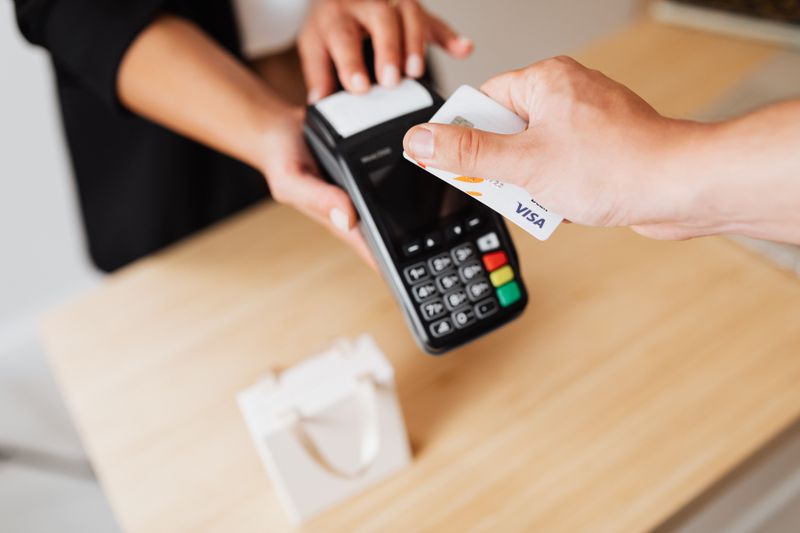
Being asked whether to pay in your home currency is an offer of dynamic currency conversion, made by the merchant's payment provider. The rate used is set by that provider and typically includes a margin larger than the network rate plus your issuer's fee.
Choosing the local currency is almost always cheaper, and the prompt is designed to suggest otherwise. This is the only one of the three layers that is entirely within your control at the moment of payment.
Cash abroad stacks the charges
A credit card withdrawal abroad can attract a cash advance fee, interest from day one, and the foreign transaction fee at once. A debit card withdrawal avoids the interest but may carry its own withdrawal and conversion fees. Specialist travel accounts and cards that waive both are widely available and worth arranging before departure.
Withdrawing larger amounts less often reduces fixed per-transaction fees, at the cost of carrying more cash.
Blocks and holds
Unexpected foreign activity triggers fraud rules, so a card can be blocked mid-trip. Notifying the issuer, or using an app to register travel, prevents most of it. Hotels and car hire firms place holds that reduce your available credit for days after the stay.
Travelling with a second card from a different issuer is the practical protection against a block.
What to arrange before you go
Identify which of your cards has no foreign transaction fee and use it for spending. Identify a separate low-fee route for cash and set a direct debit to clear the credit card in full. Always decline home-currency conversion at terminals and ATMs.
Keep the issuer's emergency number somewhere other than the phone you might lose.
The takeaway
Always choose the local currency, and carry a card that does not charge you for crossing a border.
The version you keep doing is the version that works.
Questions readers ask
Should I pay in pounds when the machine offers?
Almost never. The terminal's rate is set by the merchant's provider and usually includes a wider margin than the network rate plus your fee.
Is a credit card or debit card better abroad?
A fee-free credit card cleared in full is usually best for purchases and often carries stronger purchase protection. For cash, a low-fee debit or travel account avoids cash advance charges.